
 I bought my first digital camera eleven years ago, in 1999. A Nikon 950. It was fantastic. I liked being able to experiment without fretting about film and processing costs. I liked seeing the results of my experiments right away. And I liked being able to delete mistakes and never having to pay a cent for making that mistake. I replaced the 950 with the similar but much improved Nikon 990 the next year. Then got my first digital SLR — the Nikon D1 — in 2003, and that camera taught me that, no matter how nice a point-n-shot is, it doesn’t compare to the image quality of an SLR. Three years later I got a D40. They were all great cameras in their own ways, and I squeezed a lot of images out of each one (particularly the D40, which is still a fantastic deal for the money.)



But all of these cameras were restrictive too. The 950 and the 990 are impressive considering their sizes, but lacked interchangeable lenses. And the DSLRs, while they do have interchangeable lenses, have small sensors that change the way that the lenses work, reducing the effectiveness of wide-angle lenses in particular.



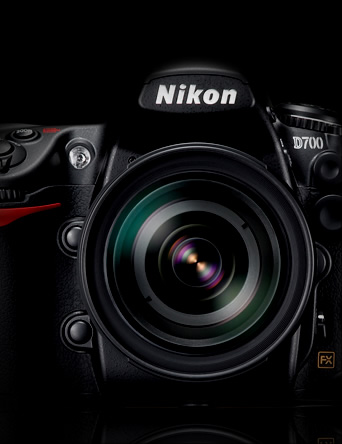
It isn’t until now that I’ve upgraded to a digital camera that truly replaces a film camera. The Nikon D700 is the real thing. It’s a full-frame digital camera that really can do everything that a film camera can do, plus a lot of things that a film camera could never do.



So that is the good news. The bad news is that I no longer have any excuses. From here on, if I create mediocre images, I have only myself to blame.
(And yes, I am aware that I have become one of those fathers that bombards everyone with pictures of his child. The same kind of father that I used to mock horribly. But how was I to know how cute my kid would be?)
Recent Comments