The pacifier dance

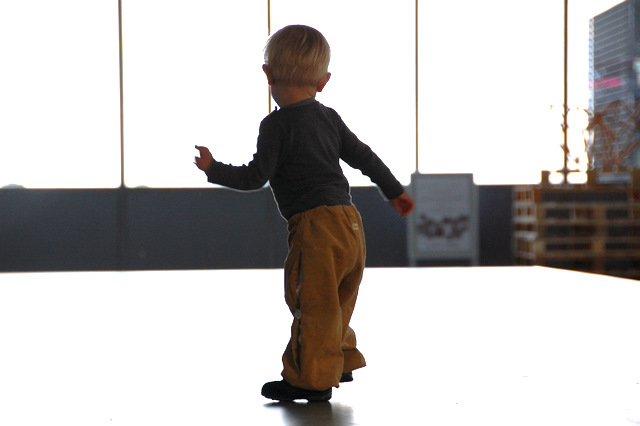
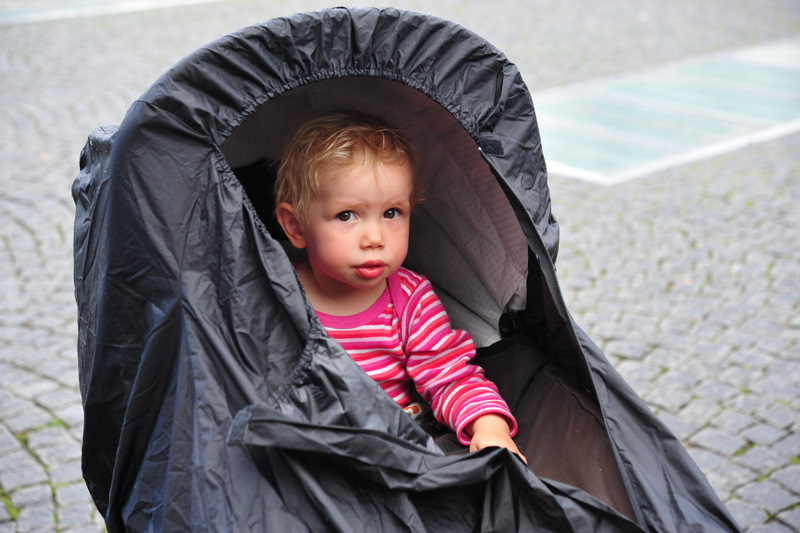
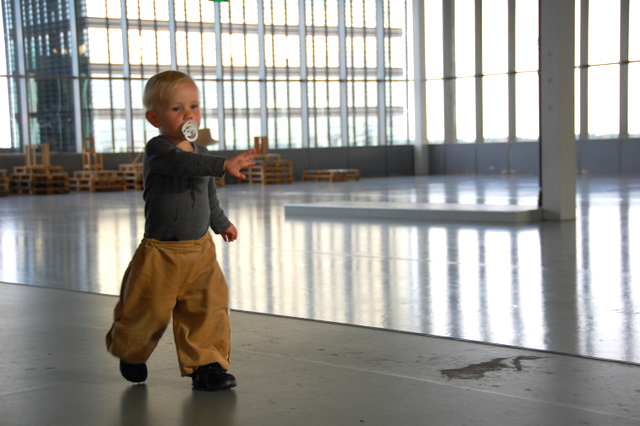
Ellen is a child that loves her pacifier. Sure, most children have an attachment, but for Ellen it is much more than that. She only willingly surrenders her pacifier to eat.

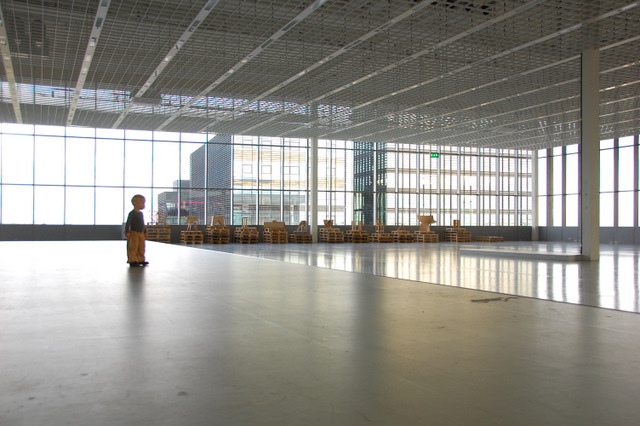
A dance of passion and desire A dance of passion and desire A dance of passion and desire

Currently Ellen finds three pacifiers at bedtime to be ideal. One for her mouth, and one for each hand. This way, if she wakes up and her pacifier has fallen out of her mouth, she can quickly replace it rather than throwing a fit. At some point we’ll have to put a stop to this with a tearful visit to a Pacifier Tree, but for now, this works for everyone.

Before they hatch

DSC_7586.JPGThe first time we saw Ellen, she was still in the womb. What we saw was a grainy, black-n-white approximation of her, but it was good. It was good to have the pregnancy so succinctly confirmed. It was good to see her little features. It was fun to take a tour of her little body. Here are her hands, here are her kidneys, here is her nose… here is her heart, beating away.

But the best part was being told that she was healthy. More than that — that she was a fine specimen. Hearing this, from a trained professional that scans unborn babies every day, was deeply comforting. In retrospect this set the tone for our experience with Ellen. She was healthy before birth, and she was strong throughout the birth. She emerged in a perfect fashion, and has been developing perfectly ever since.

But we learned the hard way, the next time around, that not every ultrasound ends happily. Not every scan fills parents with pride and sends them out of the hospital floating on a cloud. Not every scan results in blurry images proudly posted on blogs and on Facebook.

Read More →

No end in sight

Today marks the anniversary of 9/11. It was nine years ago today that the World Trade Center came down and the world changed. Changed mostly for the worst. And one way in which things have gotten worse is that the concept of freedom has lost all meaning.

Americans are taught from an early age that we’re lucky because we have freedom. This is certainly what I was taught. And furthermore, I was taught that the citizens of other countries are not really free, even if they think they are. Sure, they may have been told that they are free (by their oppressive governments) but they in fact are not free, but merely brainwashed. (This is in contrast to us Americans, who are not brainwashed at all.)

Freedom is, we are told, at the core of what it means to be an American. And so after 9/11, freedom was Bush’s rallying cry. “They hate us because we have freedom.” Then he took us to war using the preposterous idea that it would increase the freedoms of both Americans and those in the middle East.

Well, apparently Americans love war, because now — now that we’re winding one of the foreign wars down, we’re told that we need to wage another war. This war is a war against our own government, and again, freedom is the rallying cry. “Less government = More freedom”, we are told. Read More →

Cartoonishly absurd

We all knew there would be opposition to Obama’s presidency. We all knew that he would be attacked and maligned. This would have been true regardless of his politics. But I, for one, have been surprised by how cartoonishly absurd and hallucinatory the opposition is.

“When the focus is narrowed to Republicans, a Harris poll finds 57 percent of party members believe he is a Muslim, 22% believe he “wants the terrorists to win,” and 24% believe he is the Antichrist.” (Roger Ebert, Sept. 1st 2010)

If this is true — if over half of republicans think that Obama is a Muslim and one in four actually thinks he’s the Antichrist, then there really is no point in debate. There’s no point in talking about this. There is no point because the US is completely screwed.

It’s one thing to disagree over economic or military policy. It’s one thing to argue over whether our government should be strong or weak. But what we’re seeing here is complete and hysterical meltdown. If this is the reaction that conservatives have to having a progressive president with an unusual name, what would they do if Hitler came back to life and was elected president? Would their reaction be any more extreme?

Or, more to the point, could their reaction be any more extreme?

The Nikon D700

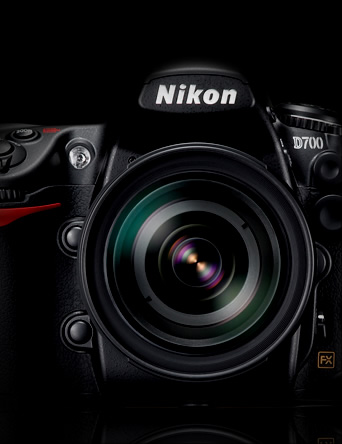
The mighty Nikon D700 I bought my first digital camera eleven years ago, in 1999. A Nikon 950. It was fantastic. I liked being able to experiment without fretting about film and processing costs. I liked seeing the results of my experiments right away. And I liked being able to delete mistakes and never having to pay a cent for making that mistake. I replaced the 950 with the similar but much improved Nikon 990 the next year. Then got my first digital SLR — the Nikon D1 — in 2003, and that camera taught me that, no matter how nice a point-n-shot is, it doesn’t compare to the image quality of an SLR. Three years later I got a D40. They were all great cameras in their own ways, and I squeezed a lot of images out of each one (particularly the D40, which is still a fantastic deal for the money.)

60mm f2.8 Micro The full-frame sensor picks up details that, coupled with a good sharp lens (60mm f2.8 Micro) captures textures brilliantly The details in the grass at Ellen's feet is something my old camera just can't match (16-35mm f4 VR)

But all of these cameras were restrictive too. The 950 and the 990 are impressive considering their sizes, but lacked interchangeable lenses. And the DSLRs, while they do have interchangeable lenses, have small sensors that change the way that the lenses work, reducing the effectiveness of wide-angle lenses in particular. Read More →

Portugal

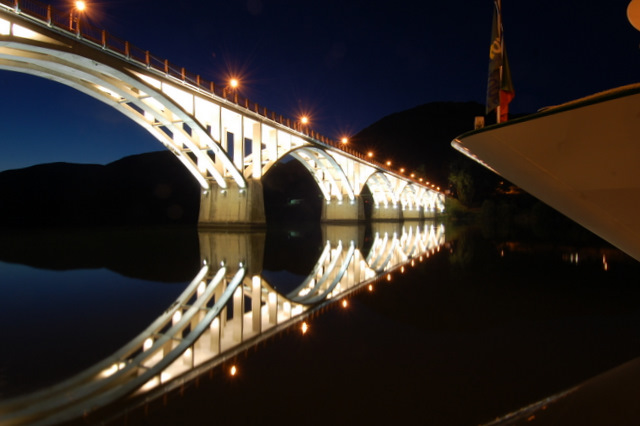
A bridge over the Douro in Barca d'Alva

Last month we traveled to Portugal with my parents for a seven-day river cruise. We flew to Porto (a city I must admit I’d never heard of before) and sailed from there up the Douro river, in the heart of Portuguese wine country. I learned a lot. For one thing, Portuguese sounds nothing like Spanish in my opinion.

Porto is surprising. It’s pretty big for one thing — especially for a city I didn’t know existed. It is second only to Lisbon in size, with about 1.3 million people.

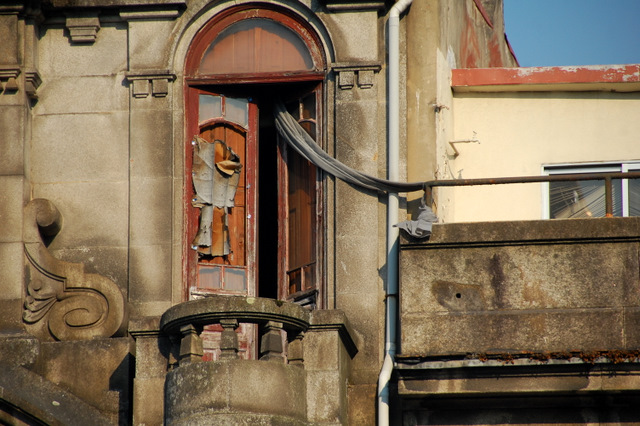
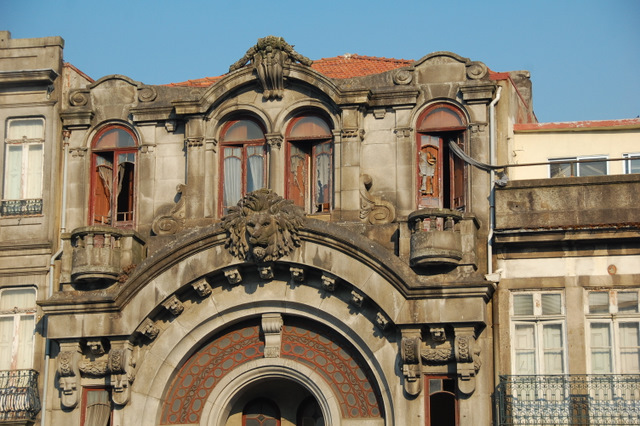
One of many rotting apartments -- this one directly across from São Bento train station in the oldest quarter of Porto One of many rotting apartments -- this one directly across from São Bento train station in the oldest quarter of Porto One of many rotting apartments -- this one directly across from São Bento train station in the oldest quarter of Porto

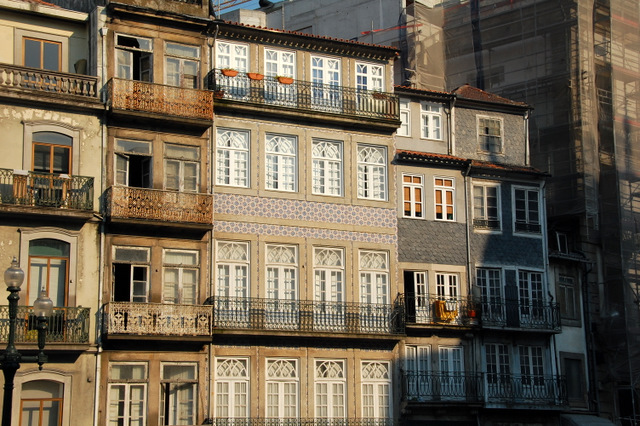
Porto is a city of sharp contrasts. The airport is modern and pleasant, with a metro line that takes you downtown quietly and efficiently. The metro stations reminded me a little of Copenhagen’s metro stations. And then you climb the stairs to the street and BAM! – there’s the contrast. Porto is full of beautiful old buildings… many of which have clearly been abandoned and some of which appear ready to be condemned. Read More →

A passion for prohibition

It seems crazy, but the US has given a huge gift to criminal gangs: virtually unlimited profit. Furthermore, the US has given this gift more than once.

In 1920, alcohol was banned in the US. The idea was well intentioned but wrong-headed. Supporters of an alcohol-free America naively thought that making alcohol illegal would make it go away. There is little evidence to that effect. Passing a law does not magically change appetites.

What the change in law did do was put legitimate bar owners, merchants, truck drivers, and brewery workers out of business and simultaneously opened up vast new business opportunities for outlaws. Suddenly, instead of providing a living for legitimate, law-abiding people, it was a criminal enterprise.

This period saw explosive growth for gangsters like Al Capone, who went to work putting together bootlegging networks. Inevitably, turf wars started, and violence followed. Additionally, since it was outlaws making the stuff, there was no regulation or safety inspection. People died and went blind regularly during this time due to bad batches of home-made spirits. Read More →

Vestvolden

Having lived in Copenhagen for over four years now, and having ridden my bike pretty consistently since arriving, I know the area pretty well. I have a lot of routes memorized, and I can ride them without thinking about where I am or being worried about getting lost. But often I get tired of my familiar routes, and strike out in a new direction.

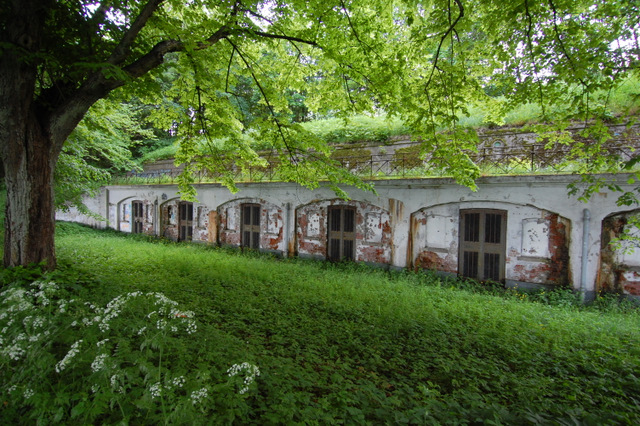
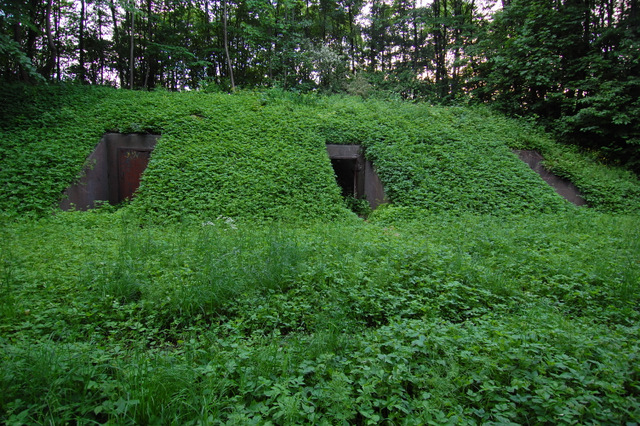
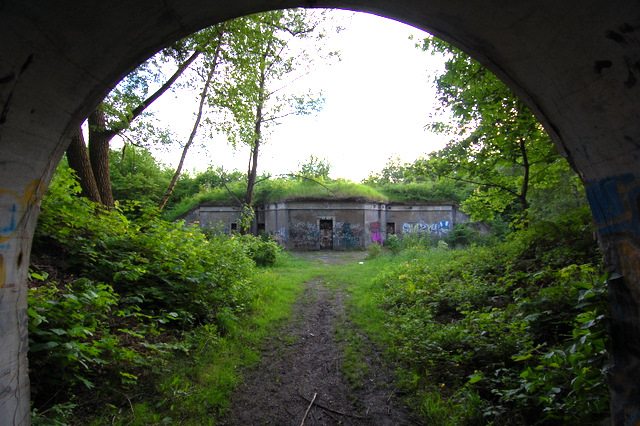
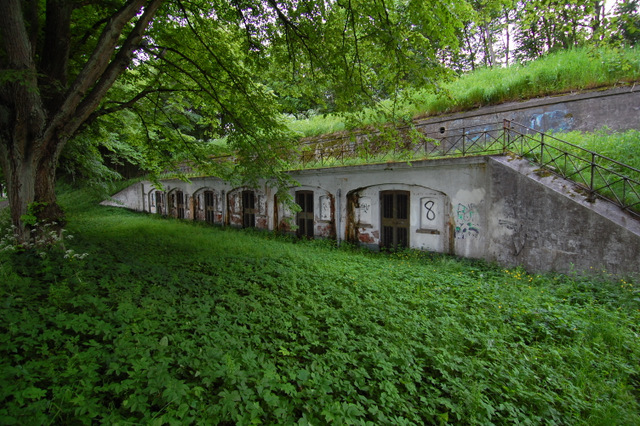
Part of Copenhagen's old outer defense system (Vestvolden) Part of Copenhagen's old outer defense system (Vestvolden) Part of Copenhagen's old outer defense system (Vestvolden)

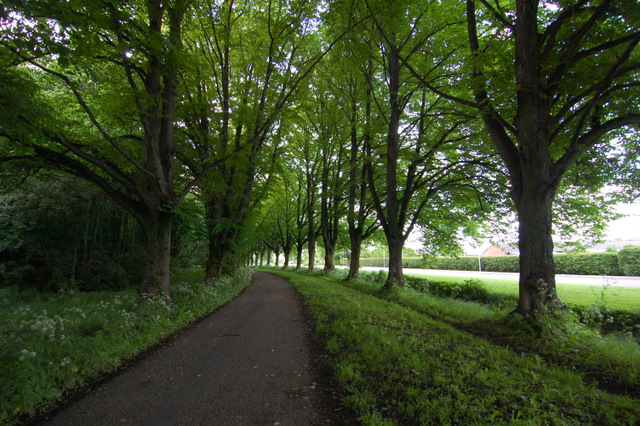
Sometimes these experiments don’t turn out well — I work myself into a dead end, or I find myself on the entrance to a highway where bikes aren’t allowed, for example. But sometimes I discover great paths. This happened to me a few months ago when I ventured just a few blocks down from one of my regular paths, and found a quiet, leafy path that goes on for miles.

Part of Copenhagen's old outer defense system (Vestvolden) Part of Copenhagen's old outer defense system (Vestvolden) Part of Copenhagen's old outer defense system (Vestvolden)

Read More →

Bella Hotel

Our apartment is next to Bella Center, the largest conference center in Scandinavia. Bella Center is where COP15, the global climate conference was held. President Obama has been to Bella Center twice in the year that we’ve lived here, once for his attempt to get the Olympic committee to choose Chicago, and once for the climate conference.

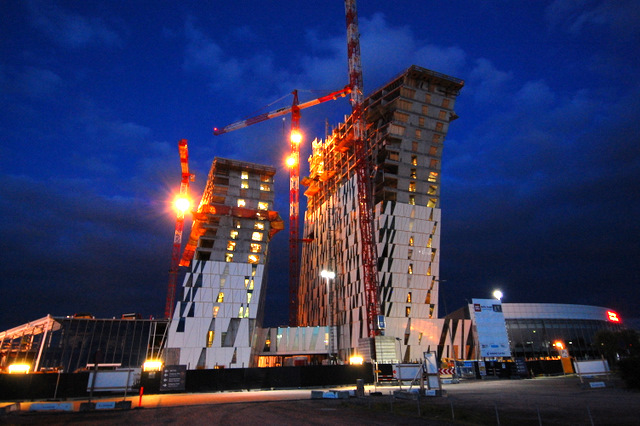
DSC_8824.JPG DSC_8876.JPG

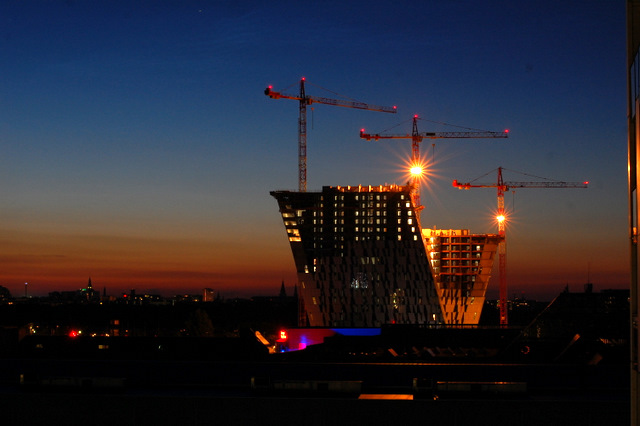
A hotel is under construction at Bella Center. Bella Hotel will be the largest hotel in Scandinavia. It’ll have 800 rooms, and an estimated 300,000 people will stay there every year. It features two leaning towers that are joined by a bridge at the top. The images below are depictions of the finished hotel.

Bella Hotel Bella Hotel Bella Hotel

Apparently it’ll be a four star hotel (I don’t even know what that means except that we’ll never stay there.) According to this site, the design is in part due to a height restriction due to the the relatively close proximity of the airport.

It won’t be finished for another year, but it’s already quite impressive.

Clear as day

Summer solstice as come and gone, and apparently I’m already worried about a lack of light. You wouldn’t think so, since I like low-light photography so much (see my favorites here.) But I’ve found that I was missing a lot of good shots in poor quality light, certainly indoors, but also as dusk.

Ellen, drinkin' the afternoon away (indoor lighting) Storm and Hanne (indoor lighting) Margaux (indoor lighting)

And so I got a new lens — one that is primarily designed to make the most of available light. (The Nikon 50mm 1.4 AFS). It’s pretty wild. It lets in four times the amount of light as my next “fastest” lens. It might be a little too good: the resulting shots frequently don’t appear to have been taken in bad light at all.

Birgitte (9:35 pm) Lisbeth and me (9:39 pm) Torben and his daughter Margaux (9:51 pm)

And yet, almost all of the shots on in this entry would not have been possible with my other lenses. Sure, I could have taken them, but they would have been blurred because the shutter would have needed to stay open half a second or more in order to collect sufficient light.

Ellen (indoor lighting) Lisbeth and Hanne (very low light) A roll of paper towels illuminated by a candle on one side and ambient outside light on the other (10:30 pm)

The last one on this page takes a little explanation. It’s a roll of paper towels on our dining table. The left side is illuminated by a candle, and the right side by ambient outside light  (10:30 pm). It’s not as sharp as it could be, but still impressive considering it’s a hand-held shot.